
News
Energy Management Systems: The Key to Real Savings for SMEs and Industries in the Valencian Community
- 03/11/2025
- Energy Efficiency Grants
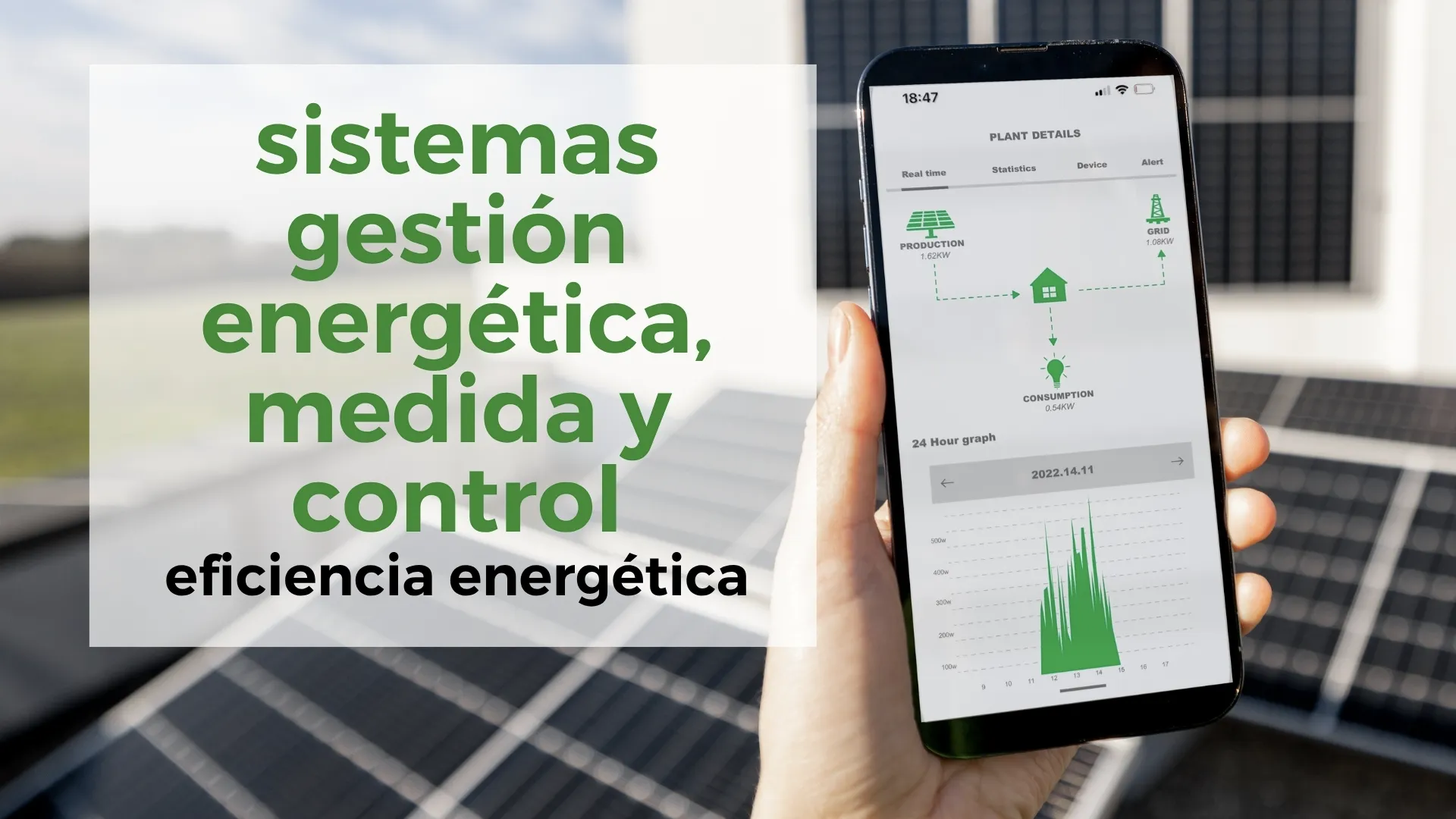
In an increasingly competitive business environment, where energy represents one of the main operational costs, SMEs and industries in the Valencian Community face a common challenge: how to reduce their energy consumption without compromising production, quality or process reliability.
The answer does not lie solely in replacing equipment or investing in new technologies, but in something deeper: measuring, controlling and intelligently managing every kilowatt-hour consumed.
At AGB Ingeniers, we believe that energy efficiency begins with knowledge. And that knowledge only comes when a company has Energy Management Systems (EMS) capable of recording, analysing and optimising its energy use in real time.
Energy as a Strategic Factor
For many years, energy was viewed as an unavoidable fixed cost. However, technological evolution, industrial digitalisation and regulatory pressure toward sustainability have completely transformed this perception.
Today, energy is a strategic factor — a resource that can be controlled, optimised, and turned into a competitive advantage.
Companies that have implemented energy management systems are able to:
-
Reduce their consumption by 10% to 30% without major upfront investments.
-
Detect hidden inefficiencies (losses, idle consumption, deviations by shifts or production lines).
-
Plan investments based on real data, not theoretical assumptions.
-
Ensure regulatory and environmental compliance with verifiable records.
In a context where energy prices fluctuate constantly, having accurate and continuous information is the only way to make profitable and sustainable decisions.
What Is an Energy Management System (EMS)?
An Energy Management System (EMS) is a set of tools, procedures and devices that allow a facility to monitor, analyse and optimise its energy consumption.
Energy Management Systems (EMS) first appeared in the 1980s and 1990s as manual or semi-automated recording tools used mainly by large industries and public buildings. At that time, systems were limited to collecting basic electrical consumption data through analogue meters or local recorders. There was no fluid connection between different areas of the facility nor the ability to analyse information in real time. Reports were generated after the fact, making decision-making difficult and limiting potential savings. However, those first steps were essential in laying the foundations for what we now know as smart energy monitoring.
With the arrival of the digital era, evolution has been exponential. Modern EMS combine IoT technology, wireless connectivity and cloud-based applications, enabling companies to measure, analyse and manage their energy consumption from anywhere. Today, it is possible to visualise a plant’s energy performance in real time on a smartphone or tablet, receive automatic alerts about consumption deviations, and remotely adjust operational parameters. Energy management platforms and dedicated apps integrate data from electricity, gas, water or compressed air systems into a single digital environment, offering predictive analysis powered by artificial intelligence (AI). This technological evolution has democratised access to energy efficiency: what was once reserved for large corporations is now within reach of any SME seeking to control its energy and improve competitiveness.
This technological progress has brought EMS fully into the Industry 4.0 paradigm, where digitalisation, automation and artificial intelligence converge to transform how companies manage resources. Today’s most advanced systems don’t just record data — they learn from it. Through AI algorithms, they can detect consumption patterns, forecast demand peaks and recommend corrective actions before inefficiencies occur. Furthermore, they can be integrated with other corporate systems — ERP, maintenance or production — to provide a global view of a plant’s energy performance. This new generation of systems turns energy management into a predictive, intelligent tool that directly supports operational efficiency, sustainability and profitability for Valencian companies.
Beyond traditional meters, an EMS includes:
-
Smart metering devices that record real-time consumption (electricity, gas, compressed air, water, etc.).
-
Sensors and analysers connected to industrial networks or control systems (SCADA, PLC).
-
Energy management software (EMS) that centralises data, generates reports and triggers alerts.
-
Visual dashboards that allow energy managers or executives to clearly understand plant performance.
The key to an effective system is not just measurement, but interpreting data correctly to enable action. For this reason, EMS form the core of a true and sustainable energy efficiency strategy.
Why Measuring Is the First Step Toward Efficiency
There’s a phrase we often repeat at AGB Ingeniers:
“You can’t improve what you don’t measure.”
SMEs and industries without energy measurement systems don’t know precisely where, when or why consumption occurs. This puts them at a disadvantage compared to companies that manage energy based on reliable data.
Having a measurement system allows companies to:
-
Detect unnecessary or abnormal consumption.
For example, equipment still running outside working hours or lines consuming more than expected. -
Compare efficiency between shifts, sections or products.
The insights gained help identify inefficient processes and make evidence-based decisions. -
Optimise supply contracts.
By understanding demand peaks and load profiles, companies can negotiate better conditions with electricity suppliers. -
Reduce their carbon footprint.
Lower energy use means lower emissions, supporting compliance with ESG goals. -
Prevent failures and breakdowns.
Control systems detect performance deviations that may indicate faults in motors, compressors or boilers.
In short, to measure is to know — and to know is to save.
How a Modern Energy Management System Works
Today’s energy management systems combine IoT, advanced analytics and automation to provide a complete and dynamic view of energy consumption.
The typical process includes:
-
Real-time monitoring – Sensors and meters record energy use at each critical point: production lines, lighting, HVAC, compressed air, etc.
-
Data centralisation – All information is collected on a single platform integrating consumption, working hours, production and even environmental conditions.
-
Smart analysis – Software identifies patterns, calculates energy performance and detects inefficiencies.
-
Automated control – Equipment operation is adjusted according to real demand, preventing overconsumption.
-
Reports and alerts – The system issues regular reports and automatic alerts so managers can act immediately.
-
Continuous improvement – Over time, the system supports improvement plans, sets savings targets and verifies results.
Implementing an energy management system not only delivers financial savings but transforms the way a company understands and manages energy.
The main benefits include:
-
Immediate energy and cost savings — detecting and correcting inefficiencies can save over 20% of consumption.
-
Greater control over processes — energy becomes a strategic, managed variable rather than an uncontrollable expense.
-
Lower emissions and environmental improvement — reduced consumption means lower CO₂ output and a stronger environmental reputation.
-
Data-driven decision-making — modernisation and maintenance investments are justified with measurable data.
-
Regulatory compliance — an EMS supports ISO 50001 certification, increasingly valued by clients and public institutions.
-
Access to grants and incentives — companies with EMS can better justify efficiency projects and secure public funding.
Energy Management as a Competitiveness Tool
In an economy where every percentage point of savings matters, energy management has become a true differentiator.
Companies that control their energy use not only cut costs — they anticipate regulatory changes, improve sustainability and strengthen market positioning.
Large corporations have long understood this. Now, Valencian SMEs have the opportunity to take the same step, with the added benefit that technology is now more accessible, modular and scalable.
Modern monitoring and control systems no longer require major investments. Thanks to advances in industrial IoT and sensorisation, progressive, affordable solutions can be implemented that grow with the business.
How AGB Ingeniers Can Help
At AGB Ingeniers, we design and implement custom energy management, measurement and control systems for every type of industry.
Our approach combines technical engineering with the administrative management of public grants, ensuring each project is efficient, eligible for funding and sustainable.
Our service includes:
-
Initial energy audit and diagnostic study.
-
Design of measurement systems and selection of equipment.
-
Installation, configuration and training.
-
Integration with energy management software or corporate platforms.
-
Results monitoring and continuous improvement consultancy.
We also help companies apply for public funding, such as the IVACE 2025 Energy Efficiency Programme, to finance part of their investment.
The energy transition does not begin with big gestures, but with smart decisions. Measuring, controlling and optimising consumption is the foundation of a modern, efficient and competitive enterprise.
In a global market where sustainability is no longer optional but mandatory, Valencian SMEs and industries have a unique opportunity to turn efficiency into a growth driver.
And technology — together with public programmes like IVACE 2025 — makes it possible.
IVACE 2025 Energy Efficiency Grants: A Boost for Investment
The Valencian Institute of Business Competitiveness (IVACE) has opened its 2025 Energy Efficiency Grants, aimed at small, medium and large companies in the Valencian Community.
These subsidies finance the installation of energy management systems, monitoring and control equipment, and other investments that enhance efficiency and reduce consumption.
Non-repayable funding:
-
Up to 55% for small companies.
-
Up to 45% for medium-sized companies.
-
Up to 35% for large companies.
Deadline: 30 December 2025, subject to budget availability.
At AGB Ingeniers, with a 100% success rate in grant processing and approval, we guide you through every stage — from the initial audit to submission and follow-up.
Contact us to assess your project and take advantage of these grants before the deadline.
Turn your energy management system into a strategic, publicly supported investment.