
News
Waste heat recovery: a saving opportunity for the fruit and vegetable industry
- 10/11/2025
- Energy Efficiency Grants
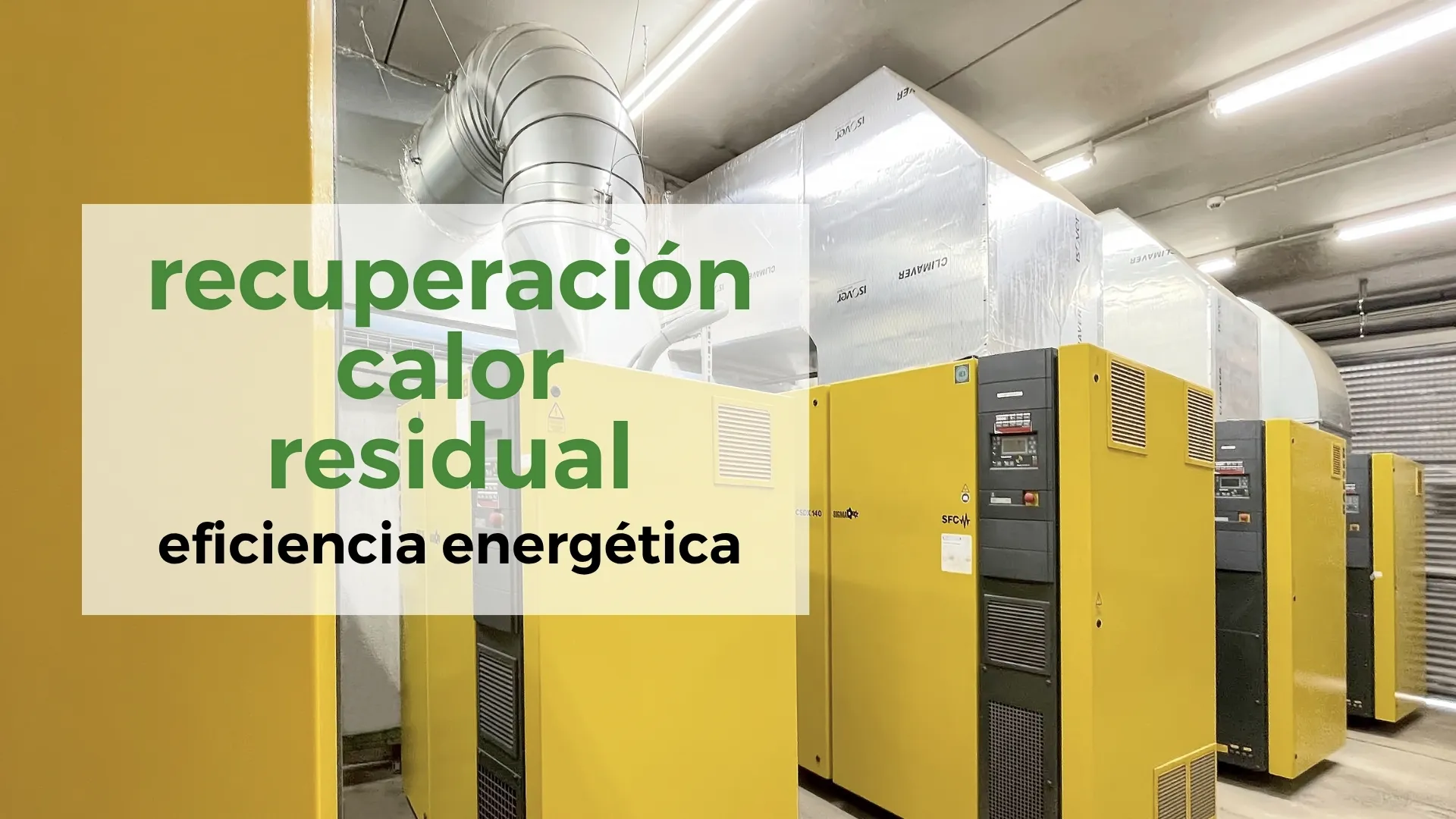
Waste heat recovery in the food and horticultural industry is a strategic action: it allows energy that would otherwise be lost to be harnessed, reduces consumption and costs, and improves the sustainability and competitiveness of your plant. In addition, by integrating it into the IVACE energy efficiency grant program, companies can benefit from financial support that makes the investment more viable.
In a context where energy efficiency and sustainability have become strategic pillars for the industry, companies in the food and horticultural sector have a key opportunity: waste heat recovery. This type of measure not only helps reduce energy consumption and operating costs but also facilitates the incorporation of technological improvements that may qualify for the IVACE energy efficiency grants. In this article, from AGB Ingeniers, experts in engineering for the food industry and in grant management, we analyze what waste heat recovery is, how it is used in food and horticultural processes, what its advantages are, and how it can be integrated into an energy improvement strategy supported by IVACE funding.
What is waste heat recovery?
Waste heat recovery is the process by which thermal energy generated as a by-product in industrial processes — which would otherwise be lost to the environment through exhaust gases, wastewater, or vapors — is captured and reused for other purposes within the facility or in other processes.
In practice, this involves the installation of heat exchangers, economizers, heat pumps, Organic Rankine Cycles, or other technologies that make it possible to use waste heat to heat water, generate steam, preheat materials, or even generate electricity in some cases.
In the food and horticultural industries, where thermal processes are common (cooking, drying, pasteurization, cooling), this type of recovery has great potential because heat, condensate, or effluents containing usable energy are often released.
What is waste heat recovery used for in the food and horticultural industry?
In the food and horticultural sector, waste heat recovery can be used at different stages of the production process. Below are some of the most relevant applications:
-
Drying and cooling: In fruit, vegetable, and horticultural processing lines, dryers or cooling tunnels release residual heat or hot vapor. Recovering this heat allows it to be reused for preheating drying air, heating water, or thermal recovery.
-
Pasteurization and thermal treatments: In the food industry, there are pasteurization, sterilization, or cooking processes that generate large amounts of heat or steam. A heat recovery system can capture part of that residual heat and reuse it for subsequent processes or for internal hot water.
-
Boilers and combustion: Many facilities have boilers that expel high-temperature flue gases. Through economizers or heat recovery systems, the boiler feed water can be preheated, or that heat can be used for other auxiliary processes.
-
Cogeneration and thermal self-consumption: In some cases, waste heat can be used to produce steam, hot water, or even electricity, improving the overall efficiency of the plant.
-
Reuse for climate control or process water: Especially in horticultural industries, where there may be cold storage rooms and opposite thermal needs, waste heat can be redirected for auxiliary uses, reducing dependence on additional equipment.
In this way, waste heat recovery allows companies to make use of energy already available internally, rather than generating it again from scratch with additional fuel or electricity consumption.
What are the advantages of waste heat recovery for these industries?
Implementing a waste heat recovery system in the food or horticultural sector offers multiple benefits — technical, economic, and environmental:
-
Reduced energy consumption
By reusing heat that would otherwise be lost, the need for external energy (such as gas, electricity, or steam) in thermal processes is reduced. Such systems can increase boiler thermal efficiency by 5–10% with economizers alone. -
Lower operating costs
Lower energy consumption means lower fuel or electricity costs, improving the profitability of the facility. This is especially relevant in industries where energy represents a significant share of production costs. -
Improved competitiveness
A food or horticultural company that reduces its energy costs increases its competitiveness in terms of both price and sustainability — a key factor in demanding markets and regulatory contexts. Thermal recovery also enhances the company’s reputation in sustainability. -
Reduced CO₂ emissions and environmental footprint
By consuming less fossil fuel or emission-based electricity, the company’s carbon footprint is reduced, helping it move toward energy transition goals. Waste heat recovery is a key solution for industrial decarbonization. -
Increased energy reliability
Reusing internal energy reduces exposure to energy price fluctuations or supply interruptions. As various studies indicate, waste heat recovery contributes to greater energy security. -
Optimization of thermal resources
Utilizing waste heat makes it possible to reduce the size or number of auxiliary equipment (boilers, heaters, etc.), decrease thermal losses, and improve the overall thermal management of the plant. -
Access to energy efficiency grants
Another key advantage is that waste heat recovery projects qualify for public funding and efficiency incentive programs, which can finance part of the investment and improve the project’s return on investment.
Integration of waste heat recovery with IVACE energy efficiency grants
The IVACE program titled “Energy Efficiency Grants for Companies 2025” aims to promote energy-saving and efficiency measures, supporting investments that reduce consumption and emissions.
What types of actions are eligible?
While each call specifies its own criteria, in general, eligible projects include:
-
Replacement or improvement of energy installations (boilers, generators, HVAC systems, thermal storage).
-
Implementation of energy management, monitoring, and consumption control systems.
-
Installations that reduce final energy consumption or improve the efficiency of thermal or electrical energy use.
-
Recovery and reuse of residual thermal energy from industrial processes, reducing primary energy demand — fully aligned with efficiency and emission reduction goals.
Specifically, waste heat recovery can be classified as a thermal energy efficiency action, fully aligned with IVACE objectives, since it delivers technical improvement, consumption reduction, emission reduction, and measurable competitiveness impact.
Application period and conditions
According to official information, the “Energy Efficiency Grants for Companies 2025” program opens on September 30, 2025 and closes on December 30, 2025.
It is important to note that if the budget is exhausted before December 30, applications submitted up to that date may be placed on a provisional reserve list.
Advantages of including this action in a grant application
-
As an eligible action, companies can reduce the net cost of their waste heat recovery investment, improving the project’s payback period.
-
Enhanced technical and economic feasibility thanks to financial backing.
-
Increased plant value through significant energy improvements, positively impacting energy certifications, corporate image, and regulatory compliance.
-
As a permanent thermal installation, the measure aligns with IVACE’s sustainability and industrial modernization requirements.
Why trust AGB Ingeniers for management and processing?
At AGB Ingeniers, we specialize in industrial and energy engineering, with specific expertise in the food and horticultural sectors. Our value proposition includes:
-
Customized energy diagnosis: we analyze your processes, identify waste heat sources, quantify savings, and propose the right solution.
-
Design and engineering of the waste heat recovery solution: exchangers, heat pumps, monitoring systems, plant integration.
-
Technical, economic, and investment justification coordination: we prepare the technical study, energy report, investment costs, savings calculations, and equipment selection.
-
Comprehensive management of IVACE grant applications: we handle all documentation, timely submission, follow-up, and final justification.
-
Support during implementation, commissioning, and results monitoring: we ensure the project is correctly executed and achieves the expected savings.
Our approach ensures your company can access energy efficiency grants with complete confidence while obtaining a turnkey project that delivers value from day one.
If your company is located in the Valencian Community, operates thermal processes, and wants to benefit from these efficiency grants, you can apply between September 30, 2025, and December 30, 2025. However, if the budget runs out before the end of the program, applications submitted by December 30, 2025 may be placed on the provisional reserve list.
At AGB Ingeniers, we offer complete support so that this type of project — waste heat recovery — becomes a true lever for savings, sustainability, and competitiveness. Contact us, and we’ll help you manage the process from start to finish.