
News
Industrial Energy Efficiency: Why Lighting, HVAC Systems and the Building Thermal Envelope Are the Essential Starting Point (and How to Benefit from IVACE 2025 Grants)
- 17/11/2025
- Energy Efficiency Grants
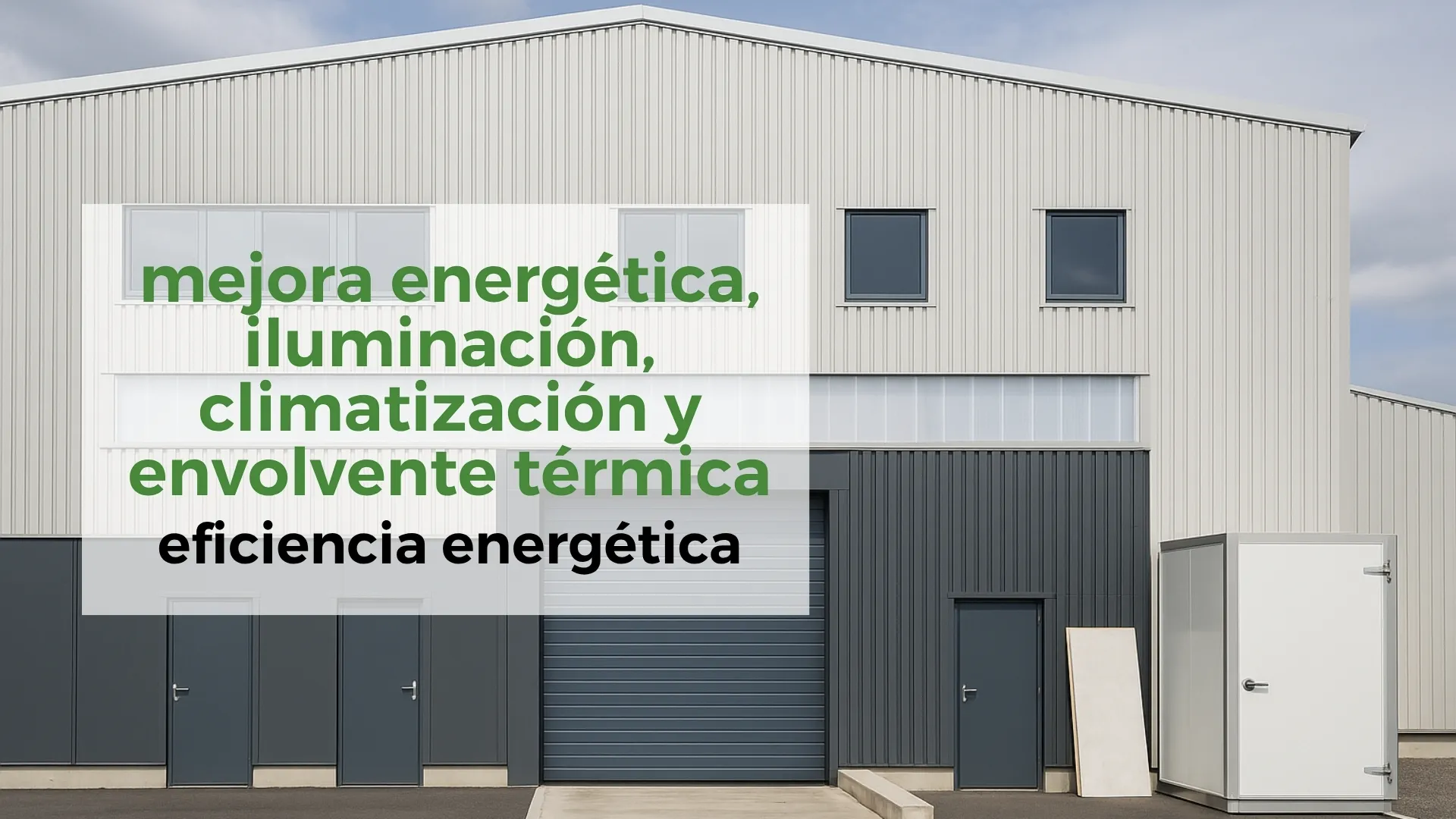
Real energy efficiency is not based on trends or isolated solutions: it is built on solid technical decisions. And the three actions with the greatest impact for any industry remain the same: Efficient lighting, Optimized HVAC, and Improved thermal envelope. These measures reduce energy consumption, improve working conditions, increase competitiveness, and contribute to the company’s sustainability. In addition, they are directly included in the IVACE 2025 grants, with submission deadlines from September 30 to December 30, 2025, with the possibility of a waiting list if funds are exhausted.
By Ana González, Agricultural Engineer – Industrial consultant in energy efficiency and grant management.
Energy efficiency is no longer a secondary option for industrial companies: it is a strategic necessity. In a context where energy dictates competitiveness, operating costs, and sustainability, the question is no longer whether to improve efficiency, but where to start.
At AGB Ingeniers we specialize in transforming these opportunities into real, funded, and successfully executed projects.
If your industry wants to take the leap towards a more efficient and profitable model, we guide you through the entire process.
Over the past years, working alongside food, horticultural and agricultural processing companies..., I have observed a common pattern: before investing in advanced technologies, digitalization, or complex energy recovery systems, it is essential to ensure that the three basic pillars of industrial efficiency are properly optimized:
- Industrial lighting
- HVAC and thermal control
- The thermal envelope of the building or facility
These three components define the minimum energy demand an industry needs to operate. If they are poorly sized, poorly insulated, outdated, or deteriorated, any subsequent improvement will be limited or constrained.
In this article, I want to explore why these three elements are essential, how they directly affect consumption and productivity, and why the IVACE 2025 Energy Efficiency Grants represent an opportunity that industries in the Valencian Community should not overlook.
1. Industrial lighting: efficiency that pays for itself
Lighting may seem like a minor aspect of a facility’s total energy consumption, but it is not. In certain installations —especially in food and horticultural processing— it can easily represent between 10% and 25% of total electricity consumption.
Switching to LED is not “changing bulbs”: it is redesigning the installation
An efficient lighting project includes:
-
Replacing traditional luminaires (metal halide, fluorescent, sodium) with industrial LED technology.
-
Optimizing lighting levels according to UNE-EN 12464-1.
-
Including presence sensors and daylight regulation.
-
Designing according to heights, reflectance, and real distribution.
-
Evaluating glare, uniformity, and shadows in work areas.
A food or horticultural processing plant with well-designed LED lighting can reduce consumption by 50% to 80%, with improvements in:
-
Visual quality and occupational safety.
-
Reduced maintenance (average lifespan 50,000–75,000 h).
-
Lower heat generation compared to traditional lighting, supporting the HVAC system.
Furthermore, it is one of the most subsidizable actions, as it generates direct and measurable savings.
2. Industrial HVAC: comfort, food safety, and savings
In many industries, HVAC is not limited to human comfort: it is essential to ensure:
-
Regulatory compliance.
-
Product quality.
-
Hygienic and sanitary conditions.
-
Stability in cold rooms, clean rooms, or processing areas.
The problem is that many industries operate with:
-
Oversized or underutilized equipment.
-
Outdated systems without variable speed drives.
-
Refrigeration systems using obsolete refrigerants.
-
Poor insulation that forces HVAC systems to overwork.
-
Lack of automation and control.
Improving HVAC does not always mean replacing machines
There are many subsidizable actions that improve performance:
-
Replacing HVAC units with high-efficiency inverter systems.
-
Upgrading industrial refrigeration with equipment featuring higher COP / EER.
-
Installing heat recovery units in ventilation systems.
-
Centralized digital control.
-
Zone-based control according to actual usage.
-
Evaporative cooling support systems.
-
Redesigning airflow distribution.
In horticultural companies, where temperature directly influences product preservation and shelf life, these improvements have a direct impact on productivity.
3. Thermal envelope: the great overlooked energy saver
The thermal envelope is the industry's “energy skin.”
It includes:
-
Façades and roofs
-
Insulation
-
Carpentry, industrial doors, and windows
-
Skylights
-
Floors in contact with the exterior
-
Thermal bridges
-
Sandwich panels and enclosures
It is common to find industrial buildings with:
-
Metal roofs without insulation.
-
Walls with poor or no insulation.
-
Industrial doors with leaks and worn seals.
-
Obsolete skylights with thermal leaks.
-
Cold rooms with poorly resolved thermal bridges.
Improving the thermal envelope generates structural savings
Unlike a machine, the thermal envelope:
-
Does not break down
-
Requires little maintenance
-
Consumes no energy
-
Lasts more than 30 years
And it can reduce:
-
HVAC demand by 20–40%
-
Cold room losses by up to 50%
-
Air infiltration that destabilizes production
Additionally, a well-designed envelope improves worker comfort, reduces hygienic risks, and lowers thermal stress on machinery and equipment.
Real efficiency = acting in the right order
When advising companies, I always emphasize a clear methodology:
- Reduce demand: Thermal envelope + efficient lighting.
- Optimize use: Efficient HVAC and refrigeration + smart control.
- Recover energy: Waste heat recovery, cold recovery, etc.
- Generate energy: PV self-consumption, biomass, or hydrogen integration in future phases.
Trying to start from the end is the most common mistake: without an efficient envelope, a solar plant or energy recovery system performs below expectations.
How these actions fit into the IVACE 2025 grants
The “Energy Efficiency Grants for Companies 2025” program from IVACE directly covers the three main actions:
✔ Industrial LED lighting
(as long as energy savings compared to the current system are demonstrated)
✔ HVAC and industrial refrigeration improvements
(equipment replacement, integration of efficient systems, and heat recovery)
✔ Actions on the thermal envelope
(roofs, façades, sandwich panels, skylights, industrial doors, insulation, etc.)
This makes these improvements an extraordinary opportunity, as they offer:
-
High savings
-
Long lifespan
-
Fast payback
-
Easy technical justification
-
High scoring in IVACE evaluations
Official deadlines for IVACE 2025 grants
Application submission: from September 30, 2025 to December 30, 2025.
Note:
If the budget is exhausted before then, companies may continue submitting applications until December 30, but they will be placed on a provisional waiting list.
Every year the funds run out sooner, so preparing documentation in advance is essential.
AGB Ingeniers: our role as experts in industrial efficiency and grants
At AGB Ingeniers we have been supporting industrial companies for years through:
-
Energy audits
-
Feasibility studies
-
Design of energy efficiency projects
-
Calculation of certifiable savings
-
Technical and economic justification
-
Full management of IVACE applications
-
Follow-up until resolution and grant approval
Our success rate in grant processing is 100%, and we know in detail how to present each project to achieve the highest technical score.
If your company is preparing investments in lighting, HVAC, or thermal envelope improvements, this is the best time to move forward. The IVACE grants can cover a very significant part of the investment and accelerate payback.